Wat Pa Tam Wua Meditation Retreat: A Complete Guide from 20 Days Inside
Wat Pa Tam Wua is one of the easiest places in Thailand to try life in a real Buddhist monastery: no booking, no fee, no need to be Buddhist. I lived there for 20 days and wrote about it in a three-part story, published in Lithuanian in 2020.
This guide keeps two kinds of information apart. Practical facts (transport, check-in, timetable, rules) come from the monastery's official website, wattamwua.com, checked in October 2026. Personal impressions come from my stay, as described in that story. Where things have changed, I say so. Full disclosure: I built the monastery's current website as a volunteer and still maintain it, so the official facts quoted in this guide come from a site I look after.
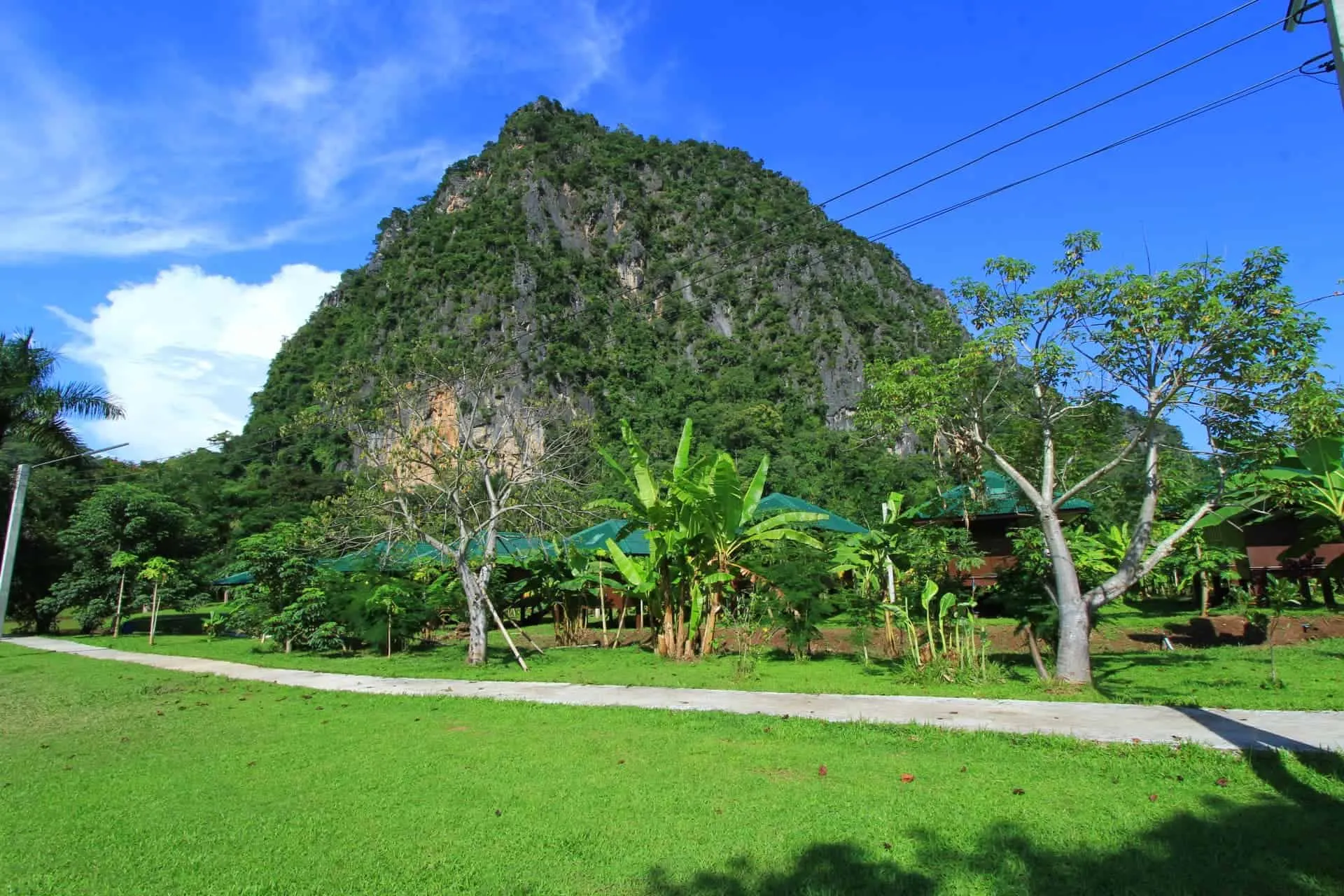
What is Wat Pa Tam Wua, and where is it?
Wat Pa Tam Wua (Thai: วัดป่าถ้ำวัว) is a Theravada Buddhist forest monastery in the Thai Forest tradition. It teaches Vipassana (insight meditation) in walking, sitting and lying-down postures, plus anapanasati (breath meditation). People of any faith or none are welcome, including complete beginners. In its own words, it is "a working monastery, not a hotel or wellness resort".
It lies in Mae Hong Son province, on Highway 1095 between Pai and Mae Hong Son, about 37 km from Mae Hong Son town, next to a stream, caves and a waterfall. The address is Huai Pha subdistrict, Mueang Mae Hong Son district, Mae Hong Son 58000.
When we walked in, I thought it was one of the most beautiful places I had ever seen: a cozy, clean monastery between green mountains, a river running past, birdsong and the smell of the jungle.
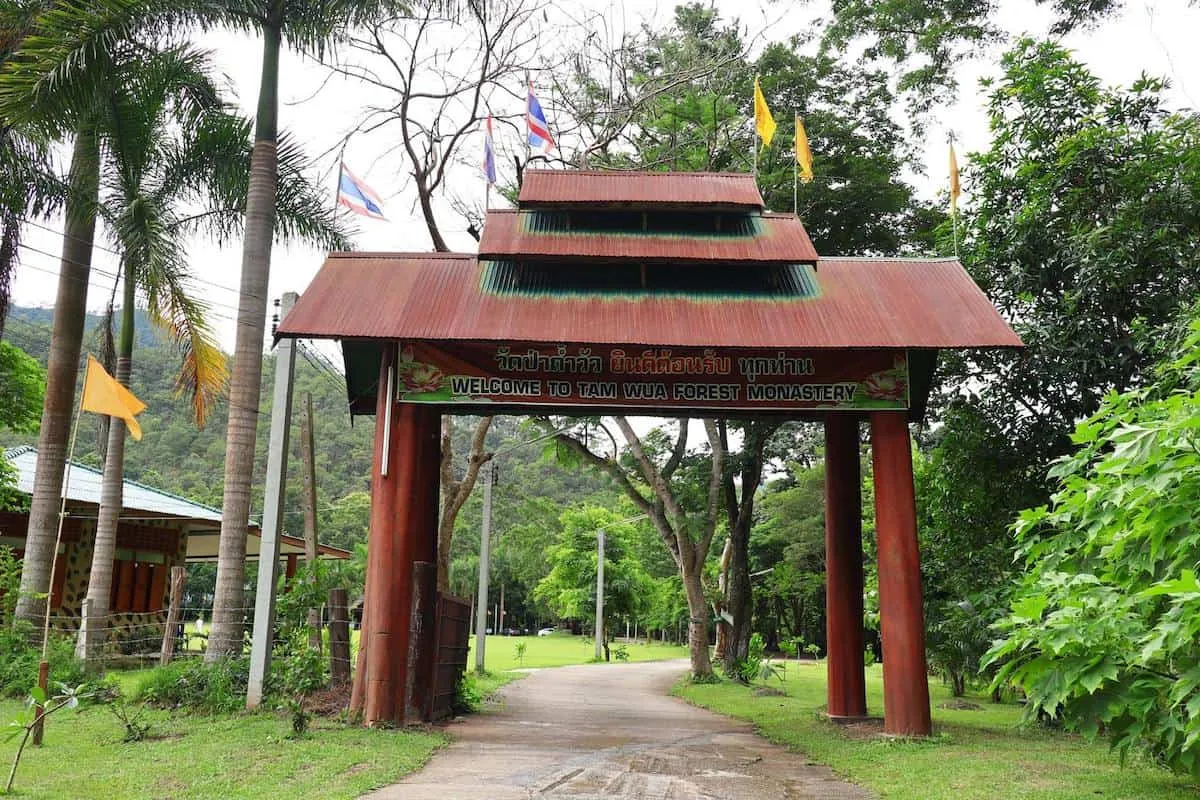
How do you get to Wat Pa Tam Wua?
The monastery is on the 245 km mountain road from Chiang Mai to Mae Hong Son via Pai, famous for its "762 curves" before Pai. If you get carsick, plan for it.
| From | How | Approximate time |
|---|---|---|
| Chiang Mai | Prempracha bus or minivan from Chiang Mai Arcade Bus Terminal toward Mae Hong Son via Pai | 6–8 hours for a through service to Mae Hong Son, per the monastery; the monastery comes before the city |
| Pai | Bus or minivan from Pai Bus Terminal toward Mae Hong Son | The monastery's page says about 2½–3 hours; travel blogs report closer to 2 hours for the roughly 70 km |
| Mae Hong Son | Bus or minivan from Mae Hong Son Bus Station toward Pai, or a yellow songthaew arranged locally | About 45–60 minutes (37 km) |
Ask the driver to let you off at the Wat Pa Tam Wua entrance on Highway 1095 (show the Thai name, วัดป่าถ้ำวัว), then walk about 1 km. The monastery's getting-here page lists no timetables or fares, so check with the operator. There is parking if you drive or ride.
Booking sites list Chiang Mai–Pai minivans roughly hourly from 06:30 to 17:30, taking about 3–4 hours for around 200–300 THB. Pai's airport has no regular scheduled flights (a service planned for 2026 was postponed). Plan to arrive well before check-in closes at 16:00.
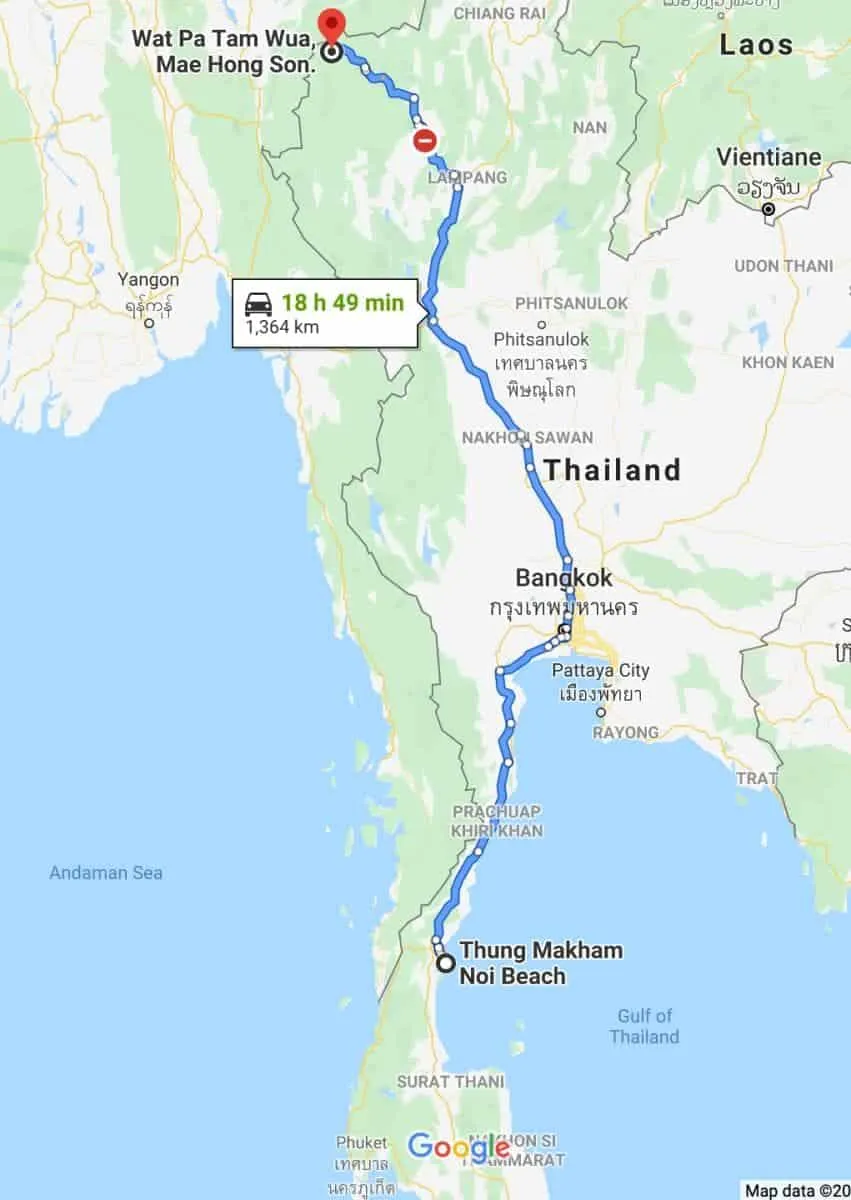
How I got there: hitchhiking 1,400 km with a friend
It was my third trip to Thailand. A month in, one of my best friends, Mindaugas, flew in, looking for a break from routine and wanting to live in a Buddhist monastery. After a few weeks of swimming, snorkeling and wild camping on the southern islands, we each made a list of monasteries, and we both thought of the same one: Wat Pa Tam Wua, in the far north. We took it as a sign.
We hitchhiked the whole way, about 1,400 km through Bangkok, in about 5–6 days. We stood by the road from early morning until midday, waited out the 36 °C heat with watermelon shakes, then hitchhiked again in the evening, mostly riding in the back of pickups.
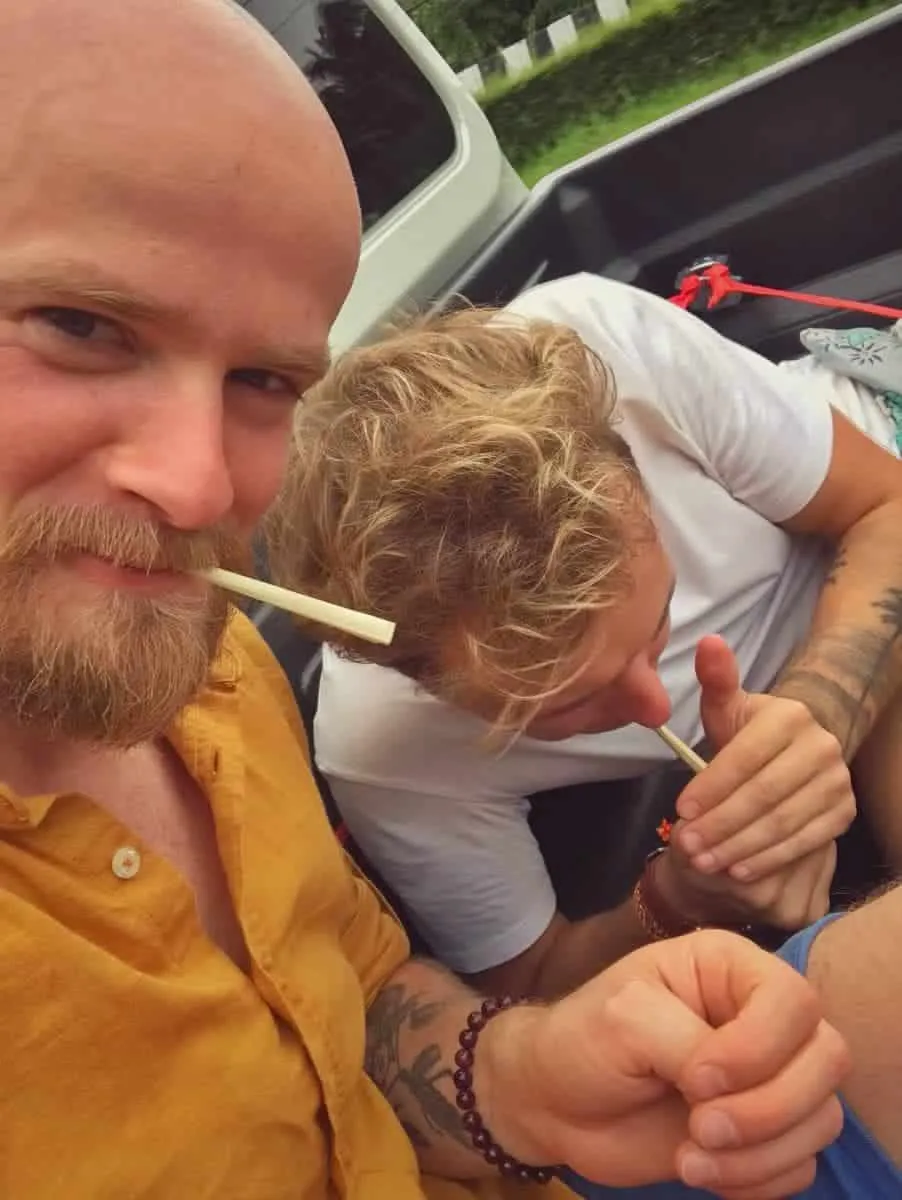
People were incredibly warm. Drivers took us farther than they were going, fed us, and even phoned friends heading north to take us on. On the sixth morning, 70 km from the monastery, a friendly Chinese traveler who spoke no English picked us up; we explained our plan with Google Translate. The monastery was on his way to a national park, and when he saw it he was so amazed that he joined us and stayed three days. I told him it was the fruit of his own good karma for stopping for two hitchhikers in the heat.
Registration, length of stay and cost
Registration: no booking, just walk in
According to the official site, you arrive any day of the year (it is open 365 days) and check in at Information between 06:00 and 16:00. Bring your original passport with a valid visa or entry stamp and no overstay; a copy is not accepted. On departure, leave your room before 09:00.
Check your visa before you travel: from 15 September 2026, citizens of 60 countries and territories, including all EU states, get 30 days visa-free for tourism, according to the Tourism Authority of Thailand, and every foreign arrival needs the free Thailand Digital Arrival Card (TDAC).
It worked the same way for us. The caretaker, Pong, a smiling man dressed in white, met us inside the gate: "Welcome, welcome! Leave your backpacks here. First let's eat, and we'll talk business later." After lunch we signed the guest book and he checked our passports.
How long can you stay?
The official FAQ says most people stay 3–10 days. The recommended minimum is 3 days and 2 nights, and "ten days is the usual maximum". Stays longer than 10 days are considered case by case, often for guests who make a sustained practical contribution. Day visitors may join only the 08:00 or 12:50 class.
I stayed 20 days and volunteered. At the time we were told that volunteers, or anyone who asked nicely, could stay longer than 10 days. Today a stay like mine needs the monastery's case-by-case approval, so ask at Information.
How much does Wat Pa Tam Wua cost?
It is free. Accommodation, bedding, white clothes and vegetarian meals cost nothing. The monastery runs on volunteers and on donations of money and food, much of it from Thai visitors. Donations are voluntary and go into the box in the small Dhamma Hall across the bridge. During my stay, nobody pressured anyone to give, and helping with work was just as welcome.
What is provided?
- White clothing, laundered for you. You can also bring your own white clothes. I remember a room with hundreds of white clothes to choose from.
- Bedding: mattress, pillow and blankets.
- Accommodation: separate men's and women's dormitories, or single huts (kutis), which have a waiting list based on length of stay and commitment and cannot be reserved.
- Meals: two vegetarian meals, breakfast at 07:00 and lunch at 11:00 (the last full meal). Tea, coffee or hot chocolate at 20:00, sometimes fruit or biscuits in the afternoon. Vegan and allergen-free food is not guaranteed.
- Hall: chairs and floor cushions for meditation.
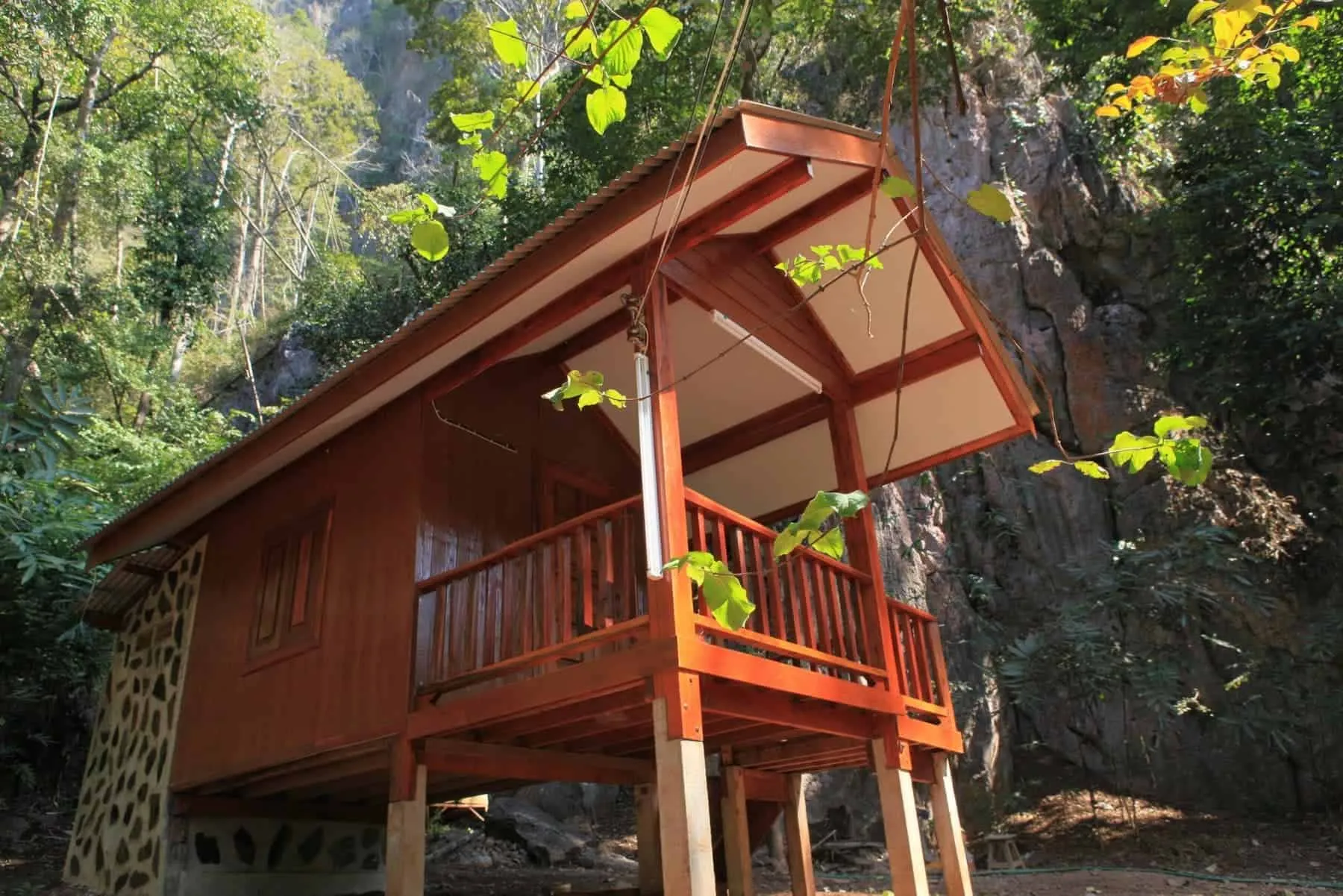
My bungalow had a bed, a fan, power sockets, a table and a shower room. The buffet food, cooked by volunteers from 5 am, was a pleasant surprise: vegetables, soy and rice dishes, soups, salads, fruit and local northern Thai tea. A small shop next to the monastery sells hygiene items, snacks and cold drinks.
What is the daily schedule at Wat Pa Tam Wua?
The middle column is the official timetable, checked in October 2026; the right column is the schedule as I wrote it down in my 2020 story. They are almost identical.
| Time | Official timetable (checked October 2026) | As I described it in my 2020 story |
|---|---|---|
| 05:00 | Meditation in your kuti (optional) | Morning meditation at home |
| 06:30 | Rice offering to the monks (mandatory) | Food offering to the monks |
| 07:00 | Breakfast | Breakfast |
| 08:00 | Dhamma talk and meditation class (mandatory) | Morning Buddhism lesson, group meditation, questions to the monks |
| 10:30 | Food offering with a short talk (mandatory) | Food offering to the monks |
| 11:00 | Lunch | Lunch |
| 12:50 | Afternoon class (mandatory) | 13:00: afternoon lesson and group meditation, questions |
| 16:00 | Cleaning and helping | Cleaning your house and the monastery, small jobs |
| 17:00 | Free time | Free time |
| 18:00 | Evening chanting, meditation and talk (mandatory) | Group chanting, meditation and lesson |
| 20:00 | Solo meditation or drinks | Meditation at home or rest |
| 22:00 | Rest | Quiet time |
Arrive 10 minutes early. Each class is about 40 minutes of walking meditation, 40 of sitting and 15 lying down. Missing a mandatory session without permission can get you asked to leave.
What the day felt like
Early morning. My alarm rang at 04:50, and by about 5 am I was sitting in meditation. The monks like to say "win the first hour of the day and you win the day". Afterward I often walked out to watch the sunrise.
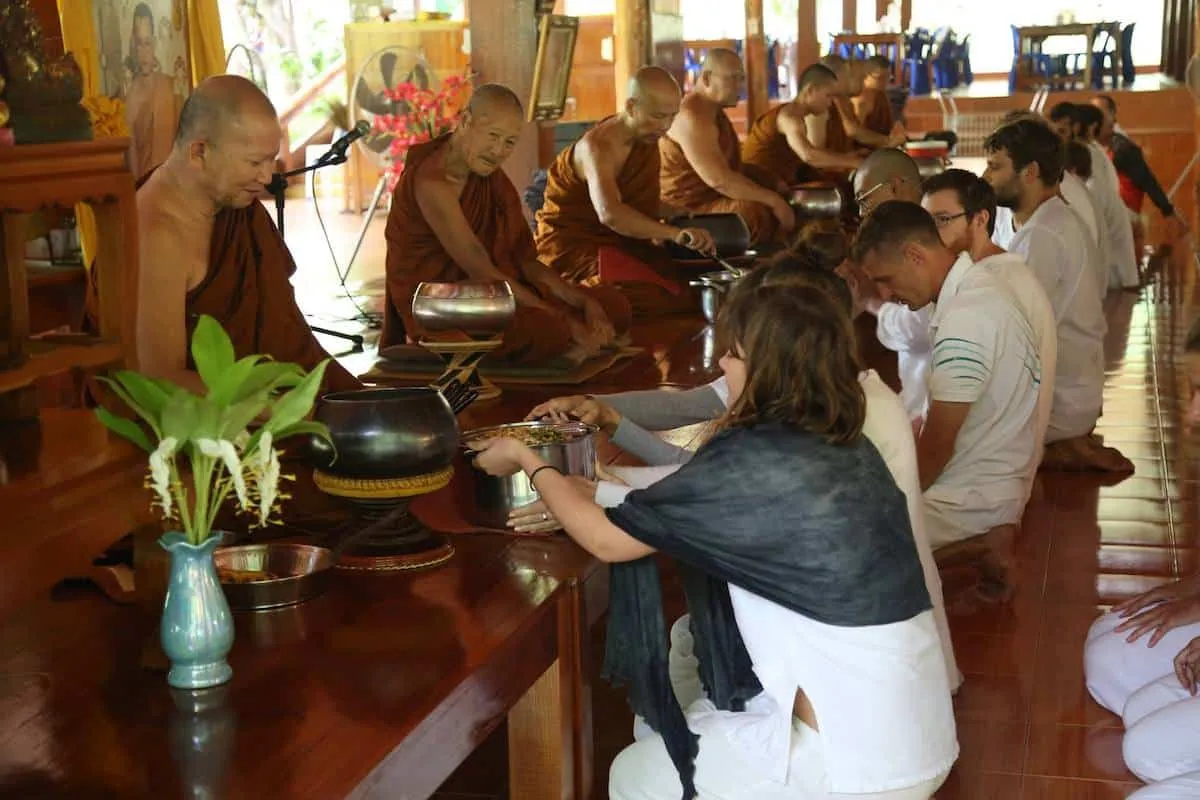
The rice offering. Everyone sits on the floor with a plate of rice. Gongs sound, the monks walk past in a line, and each guest puts a spoonful into every monk's bowl. The senior monk, usually the abbot, gives a short talk and the monks chant a blessing. At lunch, food is offered on trays. Monks eat only what is offered to them, and Thais see offering food as a source of good karma.
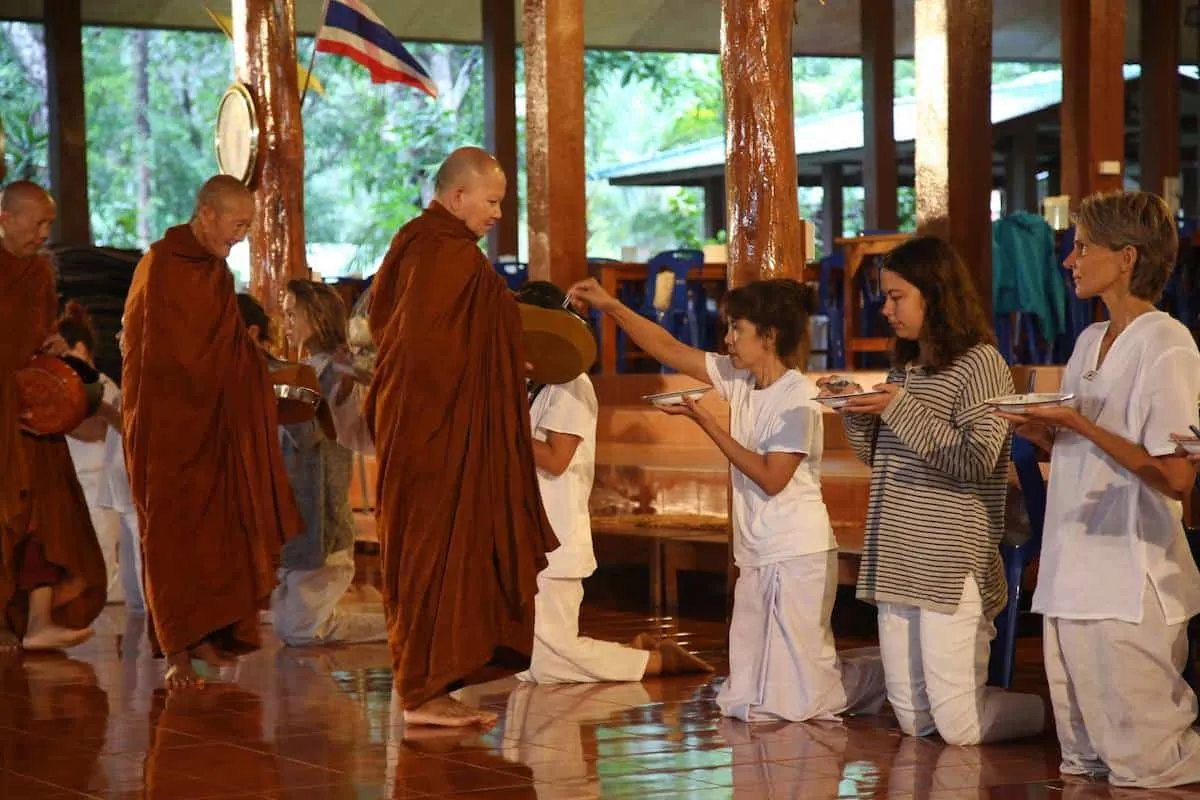
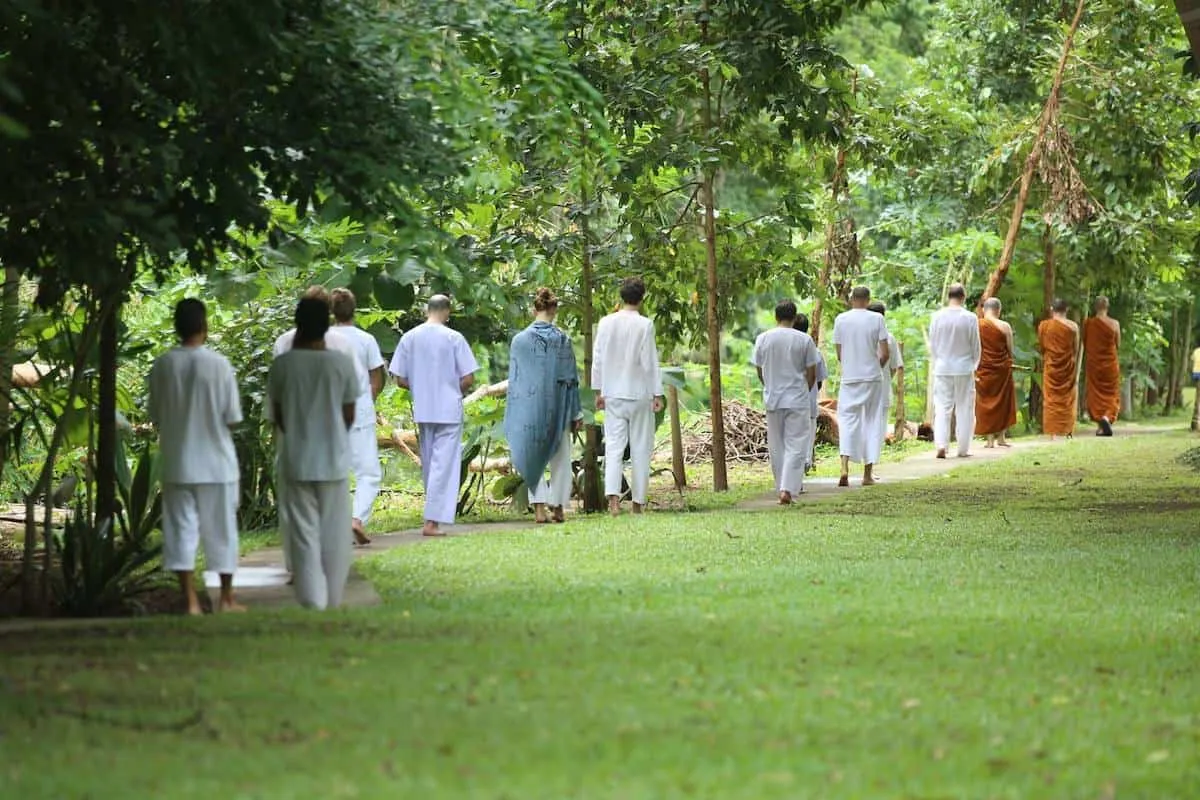
The classes. A monk talks on a topic he chooses, such as karma or forgiving yourself. Then comes walking meditation: a slow line behind the monks through the gardens, observing your thoughts and feelings. In the hall you sit, choosing Samatha (watching the breath) or Vipassana (observing sensations, emotions and the mind). Last comes lying-down meditation, so deep for some people that you hear snoring, which the monks joked about.
Questions. After meditation you can sit with a monk and ask anything. This was my favorite part of the day.
The evening. Everyone chants in Pali, then around 7 pm the lights go out for breath meditation in total darkness, with only crickets to hear. Afterward I read and went to bed early.
The 18 hours between lunch and breakfast sound scary, but the monks explained that a full stomach makes deep concentration harder. And there was an unwritten rule: if you really cannot bear the hunger, ask in the kitchen. You are there to train your will, not to suffer.
Rules and etiquette
The current rules are on the official rules page. In short:
- Eight Precepts, applied with some flexibility (for example, a little fruit or biscuits in the evening, or small jewelry).
- Zero tolerance for smoking, drugs, stealing and sexual activity. Alcohol is prohibited.
- Wear white at all times and dress modestly. In my time, that meant knees covered and nothing see-through.
- No physical affection between men and women, even married couples. Men and women live in separate areas.
- No visible yoga practice.
- Do not point your feet at monks or Buddha images.
- Be back from the caves by 17:00 (women may not enter the caves) and from free time by 18:00.
- Phones are not taken away. Keep them silent in classes and chanting and avoid bright screens. Wi-Fi is limited.
- Silence is optional. You can pick up a "Silent" badge at Information, and half the dining hall is for silent eating. Classes are always silent.
What I learned on the spot: no living being may be harmed, so you wave mosquitoes away instead of swatting them. Men sat at the front of the hall and women at the back, following tradition. Meat and fish could not even be brought in. And it is not a free holiday resort: food and shelter are provided so you can put all your energy into practice.
What to bring
The official FAQ recommends:
- your original passport or ID;
- a towel, toiletries and any medication;
- a warm layer for cool mornings;
- rain gear in the wet season;
- mosquito repellent, a flashlight and a charger;
- some cash (the small shop sells basics).
From experience: you can borrow white clothes, but take the warm layer seriously. Mindaugas's diary describes a cold, stormy first night on a thin mattress that felt "not much different from sleeping on the floor". Bring a book, too.
When to go: the monastery says November to January is usually cooler. The rainy season (roughly mid-May to mid-October) greens the valley but can affect roads. From February to April, open burning makes the air smoky across northern Thailand, according to the WHO.
My experience: what 20 days at Wat Pa Tam Wua taught me
I went to learn about Buddhism first-hand. To me it is more a practical philosophy than a religion, and I love the Buddha's advice not to follow anyone blindly but to check everything yourself. We chose Wat Pa Tam Wua over a remote "wild" monastery because the monks speak English, so we could understand the teaching and ask questions.
The people
The abbot, Sajut, is the monastery's founder: always cheerful and smiling. As I learned there, he had lived alone in the jungle for 7 years, 7 months and 7 days under a vow of silence. He surprised us by saying he had been to Lithuania, our home country, twice.
My favorite teacher was Pradžan Anik, the monastery's main teacher and the author of a book on Buddhism and meditation. Most of my important questions went to him, and I hope to go back and thank him in person.
Volunteering
In my time, everyone was asked to help for at least an hour a day: sweeping leaves, wiping tables, cleaning your hut. Mindaugas, a former cook, became a regular in the kitchen. I build websites and e-shops for a living (more in my story, in Lithuanian), so I volunteered by making the monastery a new website in English and Thai. I also kept doing a little work for my regular clients; it would not have been fair to disappear on them for weeks.
The ice cream moment
After about a week, I walked to the little shop for an ice cream. Standing in the meadow with my wallet in my hand, it felt strange to hold money again. I suddenly saw how much mental energy money and work take up, even for a relaxed freelancer traveling the world, like me. A few minutes later I was by the river with a Magnum, very happy.
My questions to the monks
These are three of the questions I shared in my story, reconstructed from memory. I am not a Buddhist teacher, so treat them as one student's notes.
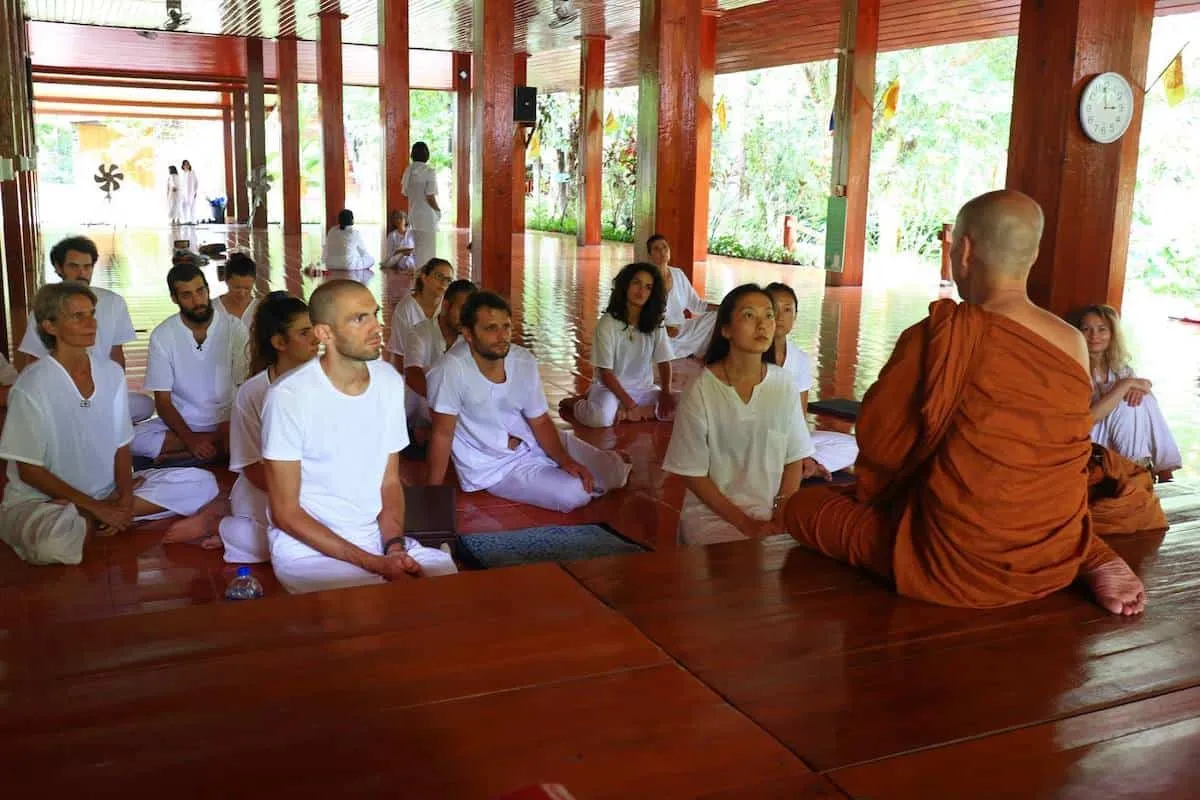
- If you hit a wild animal and it is suffering badly, should you end its life? The monk's answer: help it in every way you can. Give it water, calm it, take it to a vet if possible. We have no right to take its life, because we cannot know that it no longer wants to live. This settled a question that had bothered me for years.
- Are psychoactive substances always bad? Not necessarily, he said, from a Buddhist view. Intoxicants that cloud mindfulness, like alcohol, should be avoided, and you must never fool yourself about why you use anything. (The monastery itself has zero tolerance for drugs and alcohol.)
- How do you get rid of guilt? Admit the mistake, regret it sincerely and forgive yourself, create good karma and share it with those you hurt, and calm your mind with meditation. With time, the guilt fades.
What stayed with me
- Karma works over the long term, not necessarily within this life.
- Good karma can be shared with others, living or not.
- Nothing material lasts. The practice is learning to let go calmly, even of your body, which one monk called a temporary tool; what is truly ours is the mind.
Most of all, life slowed down. I went to every activity, rose before five, slept around ten, and little by little my mind grew calmer. Would I go back? One hundred percent. I recommend everyone try it at least once.
The full story, including Mindaugas's diary of a day in the monastery, is in Lithuanian: read the full 3-part story in Lithuanian (part 2, part 3).
Who is Wat Pa Tam Wua for?
It suits you if:
- you are a beginner and want daily instruction in English;
- you want structure without a strict 10-day silent course;
- you are traveling near Pai or Mae Hong Son and have a few days;
- you are on a budget, or want to ask monks questions directly.
Look elsewhere if:
- you want a guaranteed long stay (over 10 days is case by case);
- you want total, enforced silence and no phones (consider Suan Mokkh);
- you want an intensive course with daily one-on-one teacher interviews (consider Wat Ram Poeng);
- you want a wellness resort with yoga and a menu.
See my side-by-side comparison of Wat Pa Tam Wua, Wat Ram Poeng and Suan Mokkh.
Frequently asked questions
How do I get to Wat Pa Tam Wua from Chiang Mai?
Take a Prempracha bus or minivan from Chiang Mai Arcade Bus Terminal on the Chiang Mai–Pai–Mae Hong Son route and ask to get off at the Wat Pa Tam Wua entrance on Highway 1095, then walk about 1 km. The monastery comes before Mae Hong Son town; through services to Mae Hong Son take 6–8 hours, according to the monastery's website.
How much does Wat Pa Tam Wua cost?
Nothing. Accommodation, bedding, white clothes and vegetarian meals are free. Donations are voluntary and go into a box in the small Dhamma Hall across the bridge. Bring some cash for the small shop and for transport.
How much does a meditation retreat typically cost in Thailand?
Monastery retreats are cheap or free. In October 2026, Wat Pa Tam Wua is free (donations optional), Wat Ram Poeng in Chiang Mai charges a one-time fee of 500 THB, and the 10-day retreat at Suan Mokkh costs 2,000 THB, which covers everything.
Do I need to book Wat Pa Tam Wua in advance?
No. It is a walk-in monastery, open 365 days a year. Check in at Information between 06:00 and 16:00 with your original passport (a copy is not accepted). If you arrive later, you may be asked to come back the next day.
How long can you stay at Wat Pa Tam Wua?
Most guests stay 3–10 days. The monastery recommends at least 3 days and 2 nights and treats 10 days as the usual maximum. Longer stays are decided case by case, usually for guests who make a sustained practical contribution.
What type of Buddhism is practiced at Wat Pa Tam Wua and in Thailand?
Theravada Buddhism, the main tradition in Thailand. Wat Pa Tam Wua belongs to the Thai Forest tradition and teaches Vipassana in walking, sitting and lying-down postures, plus breath meditation (anapanasati, or Samatha). You do not need to be Buddhist to join.
Practical details were checked on the official Wat Pa Tam Wua FAQ and related pages in October 2026; confirm them before you travel. Questions about the monastery? Email me. More English stories are on the Gyvenimo Laisvė in English page.